
Air fryer maintenance tips are essential if you want your appliance to cook efficiently, last longer, and remain safe to use. While many people focus on recipes and cooking techniques, regular maintenance is what prevents smoke, bad odors, uneven cooking, and unnecessary wear.
In addition, proper care can improve performance and help you avoid common problems that often lead to costly replacements. Whether you’re learning how to clean an airfryer, wondering what is the 20 20 rule of an airfryer, or looking for practical advice on maintaining air fryer safety, this guide covers everything you need to know in one place.
Quick Answer: What Are the Best Air Fryer Maintenance Tips?
The most important air fryer maintenance tips include:
- Clean the basket and drawer after every use.
- Remove grease buildup weekly.
- Inspect the heating element regularly.
- Avoid overcrowding food.
- Never use metal utensils on non-stick surfaces.
- Keep air vents unobstructed.
- Follow the 20-20 rule when applicable.
- Store the air fryer in a dry location.
- Check the power cord for damage.
- Perform deep cleaning at least once a month.
Following these simple practices helps improve cooking performance, extends appliance lifespan, and supports maintaining air fryer safety.
Why Air Fryer Maintenance Matters
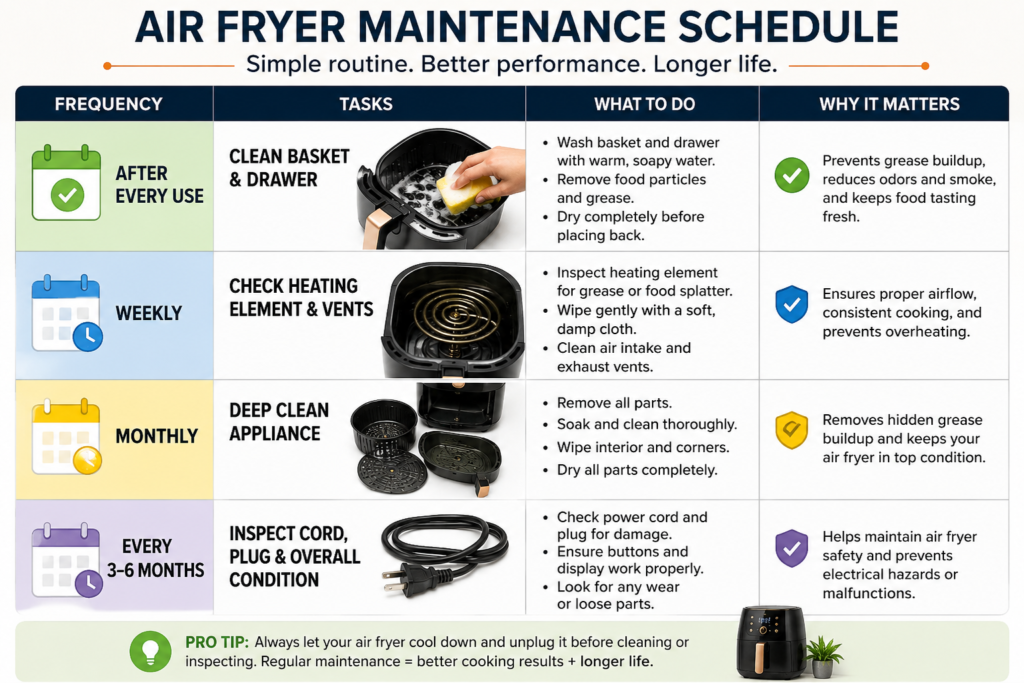
Many people assume an air fryer only needs occasional cleaning. In reality, regular maintenance affects nearly every aspect of the appliance’s performance.
Importance of Air Fryer Maintenance Tips
Proper maintenance offers several benefits:
- Consistent cooking results
- Better airflow and crispier food
- Reduced smoke production
- Lower risk of unpleasant odors
- Improved energy efficiency
- Longer appliance lifespan
- Enhanced kitchen safety
Furthermore, grease and food residue can accumulate faster than most users realize. Over time, this buildup can interfere with airflow and cause the appliance to work harder than necessary.
As a result, neglecting maintenance may lead to uneven cooking, overheating, and mechanical issues.
Daily Air Fryer Maintenance Tips
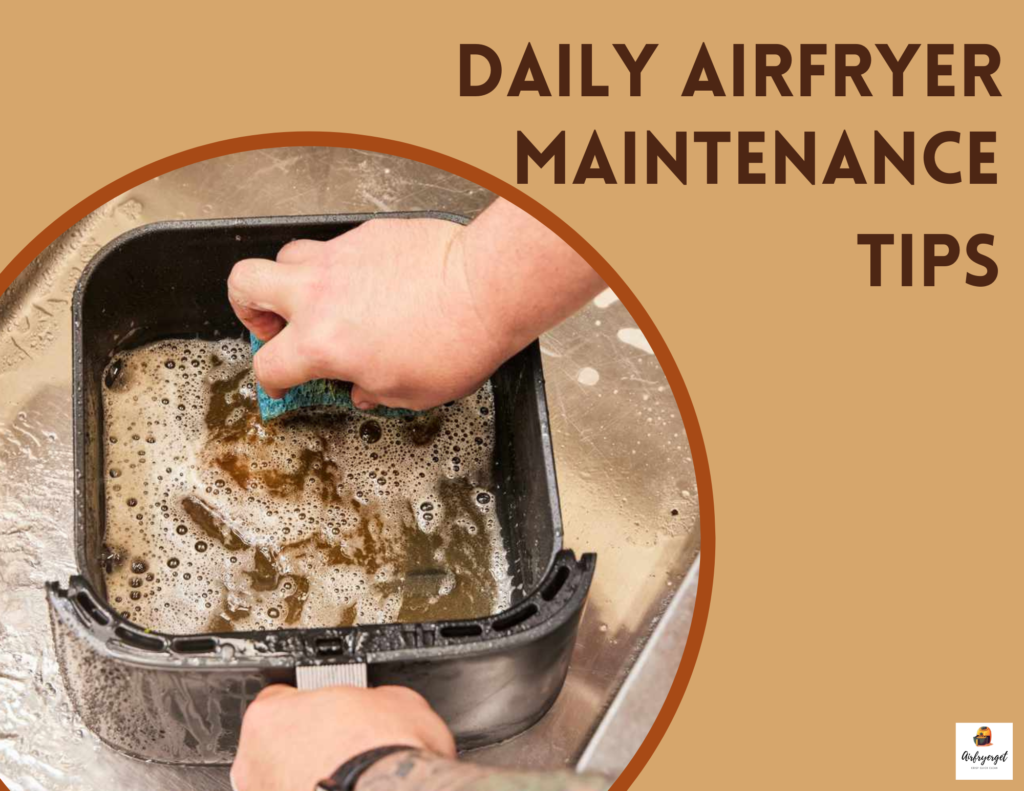
The easiest way to avoid major problems is to follow a simple daily routine.
1. Clean the Basket After Every Use
Food particles and grease can harden quickly once they cool.
Therefore, wash the basket and drawer after each cooking session using warm water, mild dish soap, and a soft sponge.
Avoid using abrasive scrubbers because they can damage the non-stick coating.
2. Wipe the Interior
After the appliance cools, wipe the interior with a damp microfiber cloth.
This simple habit helps prevent grease accumulation and keeps odors under control.
3. Empty Excess Grease
Some foods release significant amounts of oil.
Consequently, leaving grease inside the drawer can create smoke during future cooking sessions.
Always dispose of excess grease after cooking.
4. Allow Proper Cooling
Never store or cover an air fryer immediately after use.
Instead, allow it to cool completely before putting it away.
Weekly Air Fryer Maintenance Tips
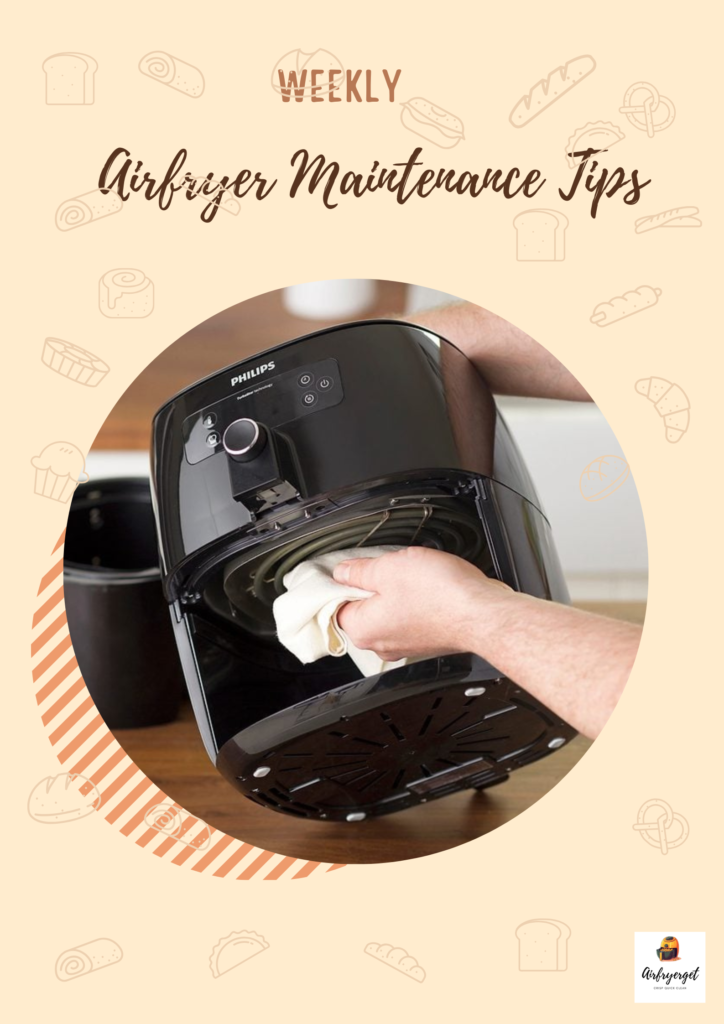
Weekly maintenance goes beyond basic cleaning and helps prevent long-term issues.
Inspect the Heating Element
The heating element is one of the most important components.
Look for:
- Food splatters
- Grease deposits
- Burnt residue
If buildup is present, gently wipe it with a soft cloth once the appliance is unplugged and fully cooled.
Clean Air Intake and Exhaust Vents
Blocked vents reduce airflow efficiency.
As a result, cooking performance may suffer.
Use a dry cloth or soft brush to remove dust and debris.
Check for Odors
Persistent odors often indicate hidden grease buildup.
If your air fryer smells unpleasant even after cleaning, perform a deeper cleaning session.
Monthly Deep Cleaning Routine
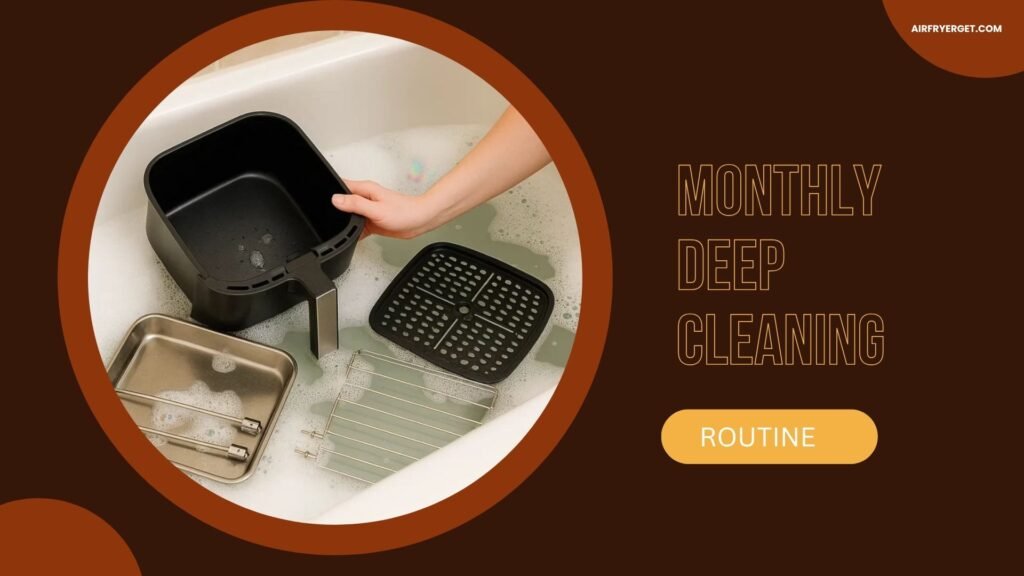
Even if you clean your air fryer regularly, a monthly deep clean is essential.
Step 1: Unplug the Appliance
Safety should always come first.
Ensure the unit is disconnected from power before maintenance.
Step 2: Remove All Detachable Parts
Take out:
- Basket
- Crisper plate
- Drawer
- Racks (if applicable)
Wash each component thoroughly.
Step 3: Clean Hidden Areas
Pay attention to corners and edges where grease often accumulates unnoticed.
Step 4: Clean Around the Heating Element
Use a soft brush or cloth to remove debris.
Never pour water directly into the appliance.
Step 5: Dry Everything Completely
Moisture can damage electrical components.
Therefore, ensure all parts are completely dry before reassembly.
For a more detailed cleaning process, check our guide on how to clean an air fryer.
What Is the 20 20 Rule of an Air Fryer?
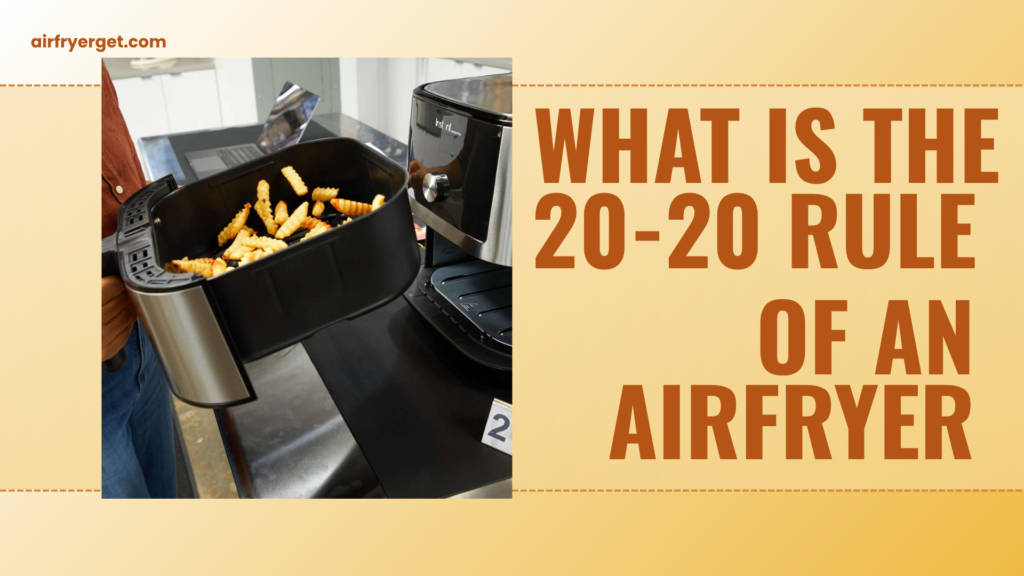
One of the most commonly searched questions is: What is the 20 20 rule of an air fryer?
The 20-20 rule generally refers to checking or shaking food every 20 minutes during longer cooking sessions and allowing approximately 20 minutes for the appliance to cool before extensive cleaning or maintenance.
While not an official manufacturer guideline, many experienced air fryer users follow this practice because it helps:
- Promote even cooking
- Prevent food from sticking
- Reduce burnt spots
- Improve airflow around food
- Make cleaning easier afterward
However, cooking times vary depending on the recipe and model.
How to Clean an Air Fryer Without Damaging It
Many users unknowingly damage their appliances during cleaning.
Knowing how to clean an air fryer properly is just as important as cleaning it regularly.
Safe Cleaning Methods
Use:
- Warm water
- Mild dish soap
- Microfiber cloths
- Soft sponges
- Non-abrasive brushes
Avoid These Mistakes
Do not use:
- Steel wool
- Metal scrapers
- Harsh chemicals
- Bleach-based cleaners
- Sharp utensils
These products can damage protective coatings and reduce the lifespan of your appliance.
Do’s and Don’ts of an Air Fryer
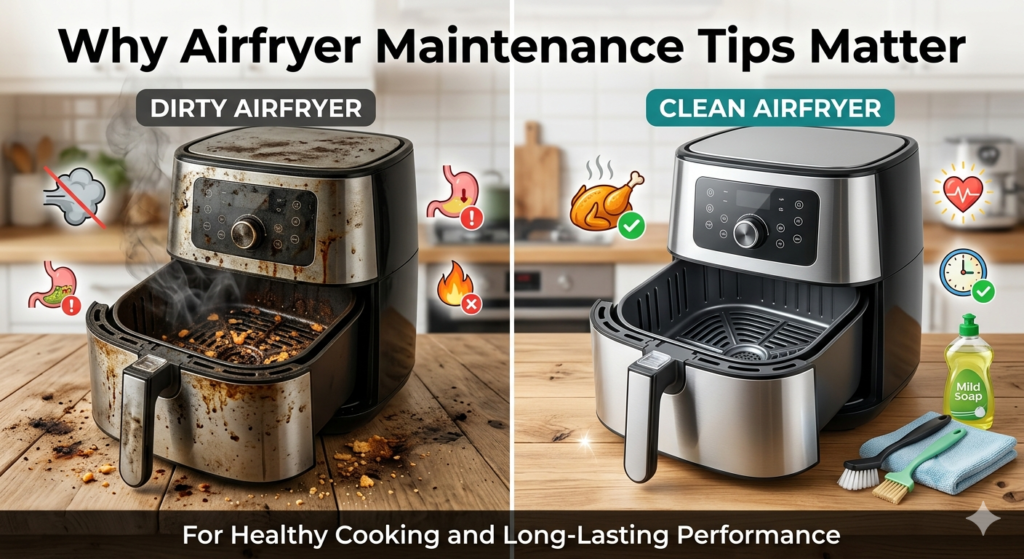
Understanding the do’s and don’ts of an air fryer helps prevent unnecessary wear and tear.
Do’s
- Read the manufacturer’s manual.
- Preheat when recommended.
- Clean after every use.
- Use accessories designed for air fryers.
- Leave adequate space around the appliance.
- Monitor grease buildup regularly.
- Follow recommended temperature settings.
Don’ts
- Do not overcrowd the basket.
- Do not block ventilation openings.
- Do not immerse the main unit in water.
- Do not use metal utensils on coated surfaces.
- Do not cook excessively greasy foods without monitoring.
- Do not ignore unusual smells or smoke.
- Do not operate with a damaged power cord.
Following these do’s and don’ts of an air fryer can significantly reduce maintenance issues.
Maintaining Air Fryer Safety
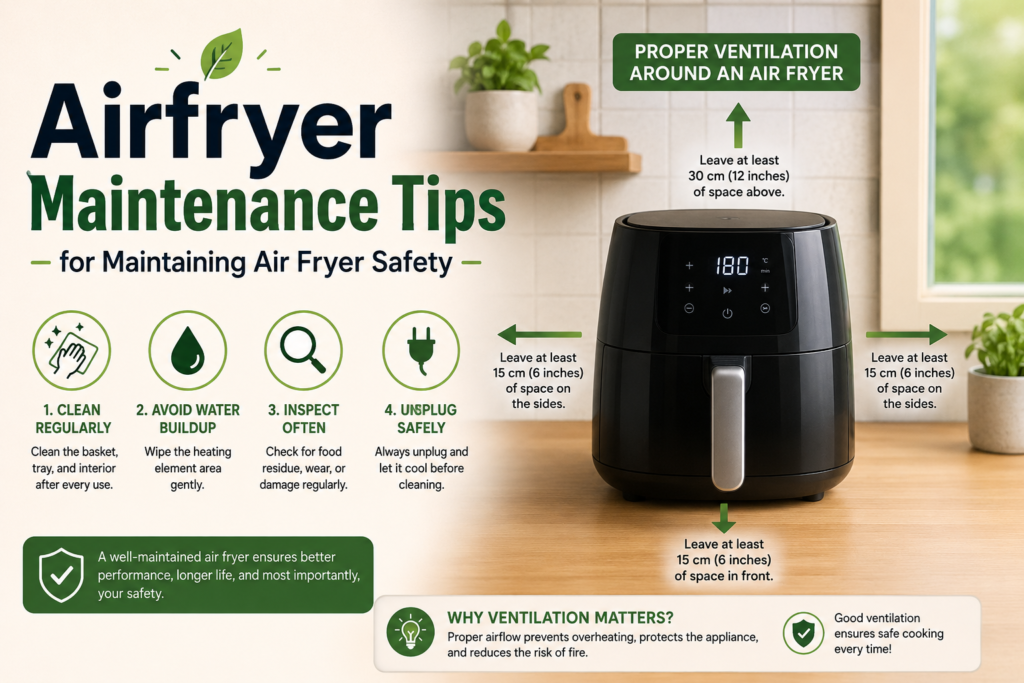
Proper maintenance is directly connected to safety.
Prevent Grease Fires
Although air fryers are generally safe, accumulated grease can become a hazard.
Therefore:
- Remove grease regularly.
- Clean after fatty foods.
- Never leave the appliance unattended for long periods.
Protect Electrical Components
Inspect:
- Power cord
- Plug
- Control panel
Discontinue use if you notice damage.
Ensure Proper Ventilation
Air fryers need adequate airflow.
Place the appliance on a stable, heat-resistant surface and leave sufficient clearance around all sides.
Avoid Water Exposure
Never expose electrical components to water.
This is one of the most important aspects of maintaining air fryer safety.
Signs Your Air Fryer Needs Maintenance
Your appliance often provides warning signs before major problems occur.
Watch for:
- Excessive smoke
- Burning smells
- Uneven cooking
- Longer cooking times
- Strange noises
- Reduced airflow
- Visible grease buildup
Addressing these issues early can prevent more serious damage.
Common Problems Caused by Poor Maintenance
Ignoring maintenance often leads to avoidable issues.
Common examples include:
Food Isn’t Cooking Evenly
Dirty baskets and blocked airflow can cause inconsistent cooking.
Excessive Smoke
Grease accumulation is one of the leading causes of smoke.
Longer Cooking Times
Restricted airflow forces the appliance to work harder.
Heating Issues
A dirty heating element may affect performance.
Maintenance Tips for Different Air Fryer Types
Not all air fryers require identical maintenance.
Basket Air Fryers
These are generally the easiest to maintain because they have fewer removable parts.
Dual Basket Air Fryers
Dual-basket models require cleaning of both cooking compartments after use.
If you’re considering different configurations, our comparison of dual basket vs single basket air fryer explores the advantages of each design.
Oven-Style Air Fryers
These models typically include multiple racks and trays.
Consequently, they require more frequent deep cleaning.
Does Brand Affect Maintenance?
Maintenance principles remain similar across major brands.
However, some designs are easier to clean than others.
For example, buyers often compare models in our Ninja vs Philips Air Fryer: The Better in 2026 guide and our Cosori vs Philips Air Fryer 2026 comparison before making a purchase decision.
Likewise, shoppers looking for affordable options can explore the best air fryers under $100 in 2026.
How Long Does an Air Fryer Last?
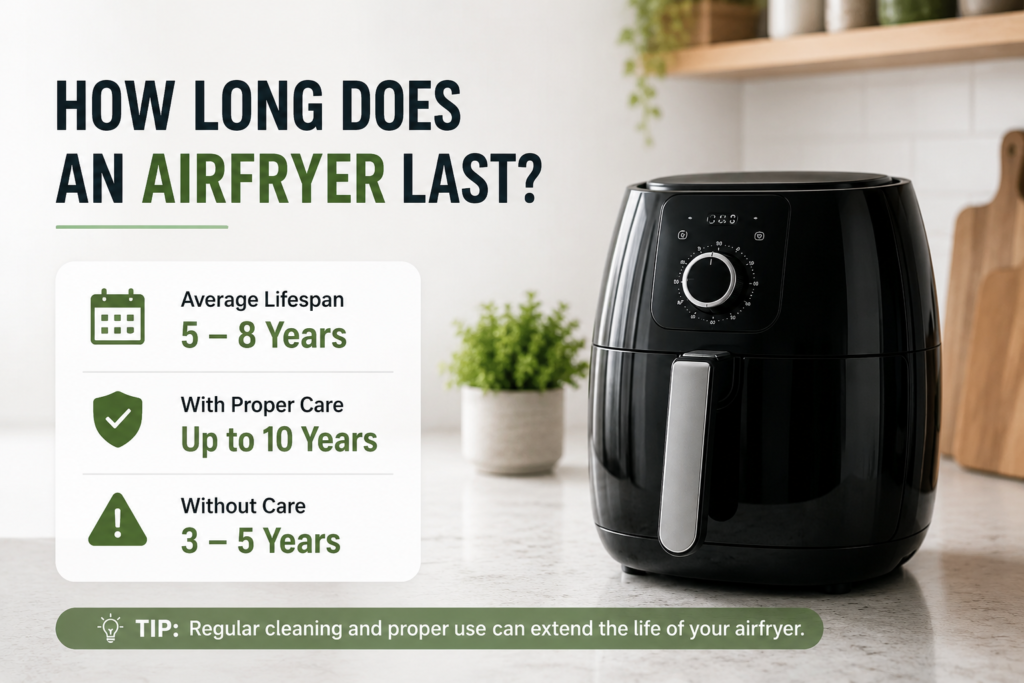
A well-maintained air fryer typically lasts between 3 and 7 years.
Some premium models can last even longer.
Factors affecting lifespan include:
- Usage frequency
- Cleaning habits
- Build quality
- Cooking practices
- Storage conditions
Therefore, consistent air fryer maintenance tips can help maximize your investment.
Frequently Asked Questions
How often should I clean my air fryer?
The basket and drawer should be cleaned after every use. A deeper cleaning should be performed weekly, while a complete maintenance check is recommended monthly.
What is the 20 20 rule of an air fryer?
The 20-20 rule generally involves checking food every 20 minutes during longer cooking sessions and allowing the appliance to cool before deep cleaning.
Can poor maintenance damage an air fryer?
Yes. Grease buildup, blocked airflow, and neglected cleaning can reduce performance and shorten appliance lifespan.
Why does my air fryer smell bad?
Persistent odors are usually caused by accumulated grease, food residue, or inadequate cleaning.
Is it safe to use aluminum foil in an air fryer?
Yes, when used correctly and without blocking airflow. Always follow manufacturer recommendations.
How can I improve air fryer safety?
Regular cleaning, proper ventilation, cord inspection, and responsible operation are essential for maintaining air fryer safety.
Final Thoughts
Following these air fryer maintenance tips doesn’t require much time, yet the benefits are substantial. Regular cleaning, routine inspections, and proper usage habits can improve cooking performance, extend appliance lifespan, and enhance safety.
Whether you’re learning how to clean an air fryer, trying to understand what is the 20 20 rule of an air fryer, or simply looking for the best practices for maintaining air fryer safety, consistent maintenance remains the key to getting the most from your appliance for years to come.