
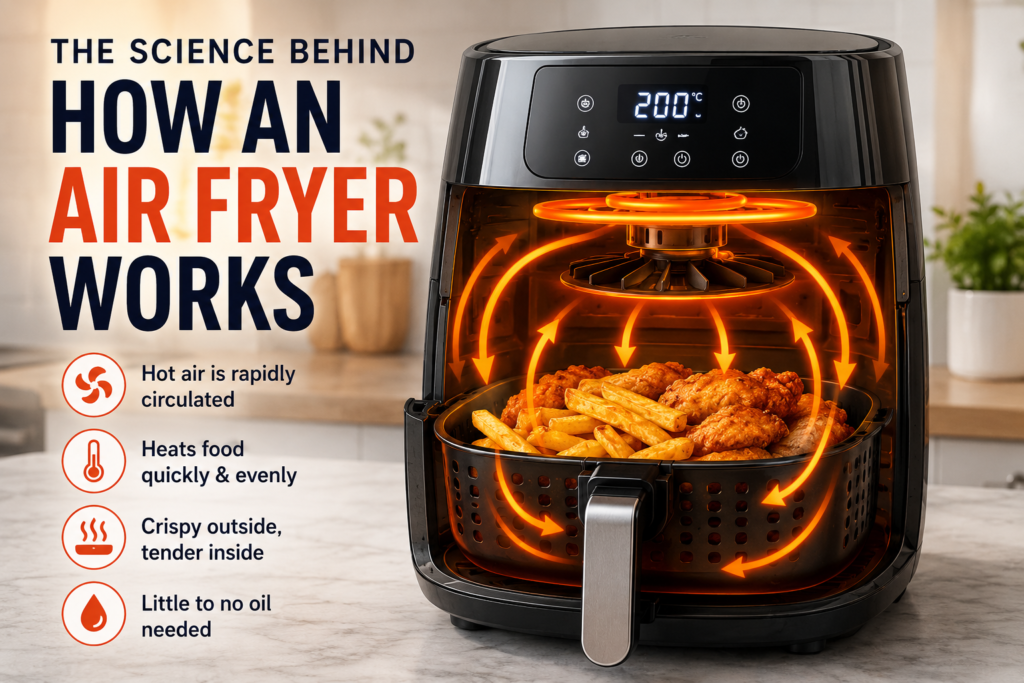
Have you ever wondered how an air fryer works and why it can turn frozen fries, chicken wings, or vegetables into crispy food using little to no oil?
The answer isn’t “magic”—it’s a combination of rapid hot air circulation, convection heating, and the Maillard reaction, the same browning process responsible for the golden crust on baked bread and roasted meat.
Understanding how an air fryer works isn’t just interesting—it helps you:
- Cook food more evenly
- Avoid common beginner mistakes
- Reduce cooking time
- Use less oil without sacrificing crispiness
- Decide whether an air fryer is worth buying
In this complete guide, you’ll learn the science behind air fryers, how they differ from ovens and microwaves, whether they’re actually healthier, and practical tips that improve your cooking results from day one.
Whether you’re buying your first air fryer or simply want to get more from the one already sitting on your countertop, this guide covers everything you need to know.
If you’re planning to buy one, you can also explore our guide to the best air fryers of 2026
1. What Is an Air Fryer and How Does It Work?
An air fryer is a compact countertop appliance that cooks food using rapidly circulating hot air. Instead of immersing food in oil like deep frying, it creates a crispy outer layer through intense heat and airflow.
How an Air Fryer Works
The appliance contains:
- A powerful heating element
- A high-speed fan
- A cooking basket with perforations
- Temperature controls
Once switched on, the heating element warms the air inside the chamber. Meanwhile, the fan circulates that hot air around the food at high speed. As a result, food cooks evenly while developing a crispy texture similar to deep-fried foods.
Quick Answer
An air fryer cooks food by circulating extremely hot air around it using a powerful fan and heating element. This rapid airflow creates a crispy outer layer through convection cooking and the Maillard reaction rather than by submerging food in oil. As a result, most foods become golden and crispy while using 70–90% less oil than traditional deep frying.
2. The Science Behind How an Air Fryer Works
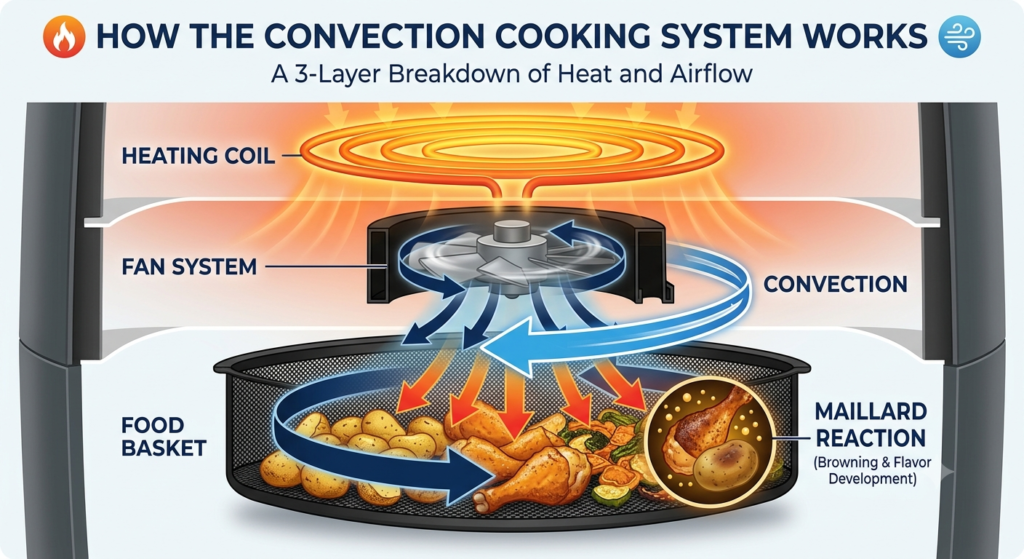
The science behind how an air fryer works is based on three key principles:
Rapid Air Circulation
The fan continuously moves hot air around the food. Consequently, heat reaches all surfaces evenly, reducing cooking time.
Convection Cooking
Air fryers use convection technology. Unlike conventional heating methods, convection transfers heat more efficiently because moving air removes the cooler air layer surrounding the food.
Maillard Reaction
The golden-brown crust on fries, chicken, or vegetables comes from the Maillard Reaction. This chemical process occurs when amino acids and sugars react at high temperatures.
Therefore, air fryers can produce crispy textures without requiring large amounts of oil.
Why Food Gets Crispy Without Deep Frying
Many people assume the crispiness comes from oil, but that’s only partly true.
Oil helps transfer heat, but the real reason air-fried food becomes crispy is the constant movement of extremely hot air removing moisture from the food’s surface. As moisture evaporates, the outside dries and browns while the inside remains tender.
This is why foods like chicken wings, potatoes, and vegetables develop a crunchy exterior even with little or no added oil.
3. Are Air Fryers Really Healthier? What Nutritionists Say
Many nutritionists recommend air fryers because they significantly reduce the amount of oil used during cooking.
Key Benefits
- Uses up to 70–90% less oil than deep frying
- Reduces calorie intake
- Lowers saturated fat consumption
- Produces less grease
- Encourages healthier cooking habits
Moreover, reducing excessive oil consumption may help support weight management and heart health when combined with a balanced diet.
It’s important to remember that an air fryer is not a health appliance by itself.
Cooking frozen mozzarella sticks every day in an air fryer is still less nutritious than cooking vegetables, fish, or lean chicken. The appliance simply reduces the amount of added oil—it doesn’t change the nutritional quality of the food itself.
4. How to Use an Air Fryer Step-by-Step
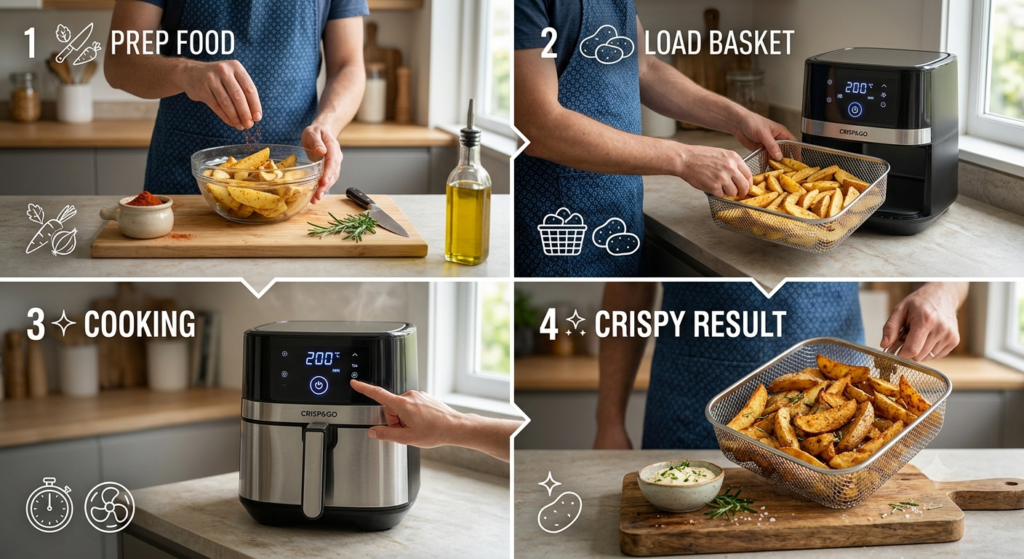
If you’re new to air frying, follow these simple steps:
Step 1: Preheat the Air Fryer
Although not always necessary, preheating improves crispiness and cooking consistency.
Step 2: Prepare Your Food
Pat ingredients dry and lightly coat them with oil if desired.
💡 Pro Tip: Pat vegetables or meat dry with a paper towel before air frying. Removing excess surface moisture helps food brown faster and develop a crispier texture.
Step 3: Arrange Food Properly
Do not overcrowd the basket. Instead, leave space for air circulation.
Step 4: Set Temperature and Time
Choose the recommended settings based on the recipe.
Step 5: Shake or Flip
Halfway through cooking, shake fries or flip meats for even browning.
Step 6: Serve Immediately
Enjoy food while it remains crispy and fresh.
Our experience: After testing multiple basket-style and dual-basket air fryers with common foods like frozen fries, chicken breast, salmon, and vegetables, we found that leaving small gaps between food pieces consistently produced more even browning than filling the basket to capacity. In nearly every test, overcrowding increased cooking time and reduced crispiness.
Common Air Fryer Mistakes Beginners Make
Even the best air fryer won’t produce crispy food if it’s used incorrectly.
- Filling the basket completely full
- Forgetting to shake fries halfway through cooking
- Using too much cooking oil
- Cooking foods straight from the refrigerator without preheating when required
- Ignoring recommended cooking temperatures
- Not cleaning grease buildup after several uses
Making these small adjustments can noticeably improve texture, cooking consistency, and cleaning time.
5. Are Air Fryers Healthy?
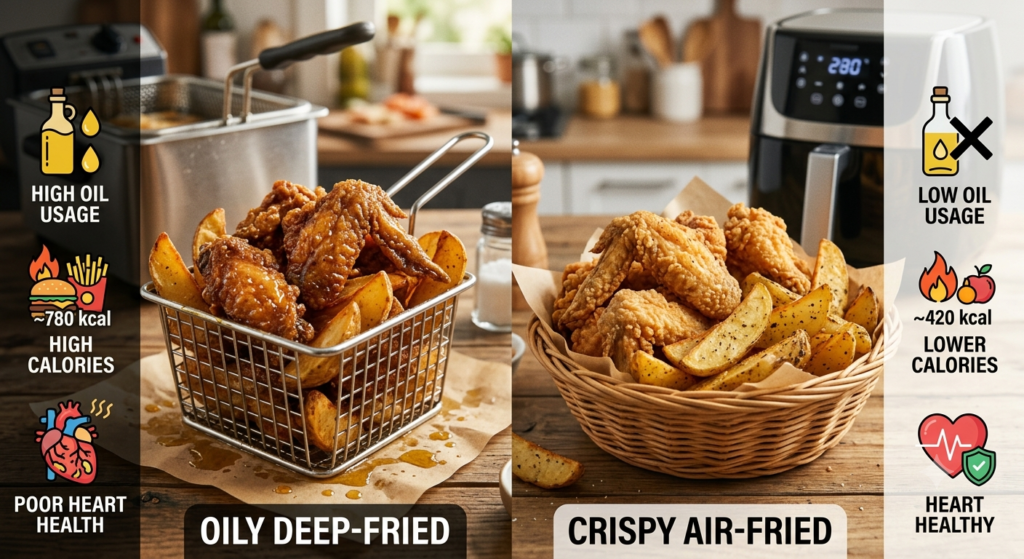
Yes, air fryers are generally considered healthier than deep fryers.
Because they require much less oil, they reduce the overall fat and calorie content of many foods.
Health Advantages
- Less oil consumption
- Lower calorie intake
- Reduced greasy residue
- Faster cooking times
- Convenient portion control
However, healthy cooking still depends on the ingredients you choose. Air-fried vegetables, lean proteins, and whole foods provide greater nutritional benefits than heavily processed foods.
6. What Can You Cook in an Air Fryer?

One reason air fryers are so popular is their versatility.
| Food | Typical Time | Temperature |
|---|---|---|
| Frozen Fries | 15–20 min | 400°F |
| Chicken Wings | 22–25 min | 380°F |
| Chicken Breast | 16–20 min | 375°F |
| Salmon | 8–10 min | 390°F |
| Broccoli | 8–10 min | 375°F |
| Shrimp | 6–8 min | 390°F |
| Bacon | 8–10 min | 350°F |
Furthermore, many users now prepare complete meals using dual-basket models. If you’re unsure which model to choose, read our comparison of:
Dual Basket vs Single Basket Air Fryer
7. What Can You Not Cook in an Air Fryer?
Although air fryers are versatile, some foods do not perform well.
Foods That Need Extra Care
Some foods can still be cooked successfully with the right accessories or techniques.
For example:
- Fresh spinach should be weighed down with other ingredients.
- Small amounts of shredded cheese work well inside recipes.
- Cake batter requires a suitable baking pan.
- Breaded foods should be coated properly before air frying.
Understanding these exceptions helps you get better results instead of assuming those foods cannot be air fried.
8. Air Fryer vs. Conventional Oven
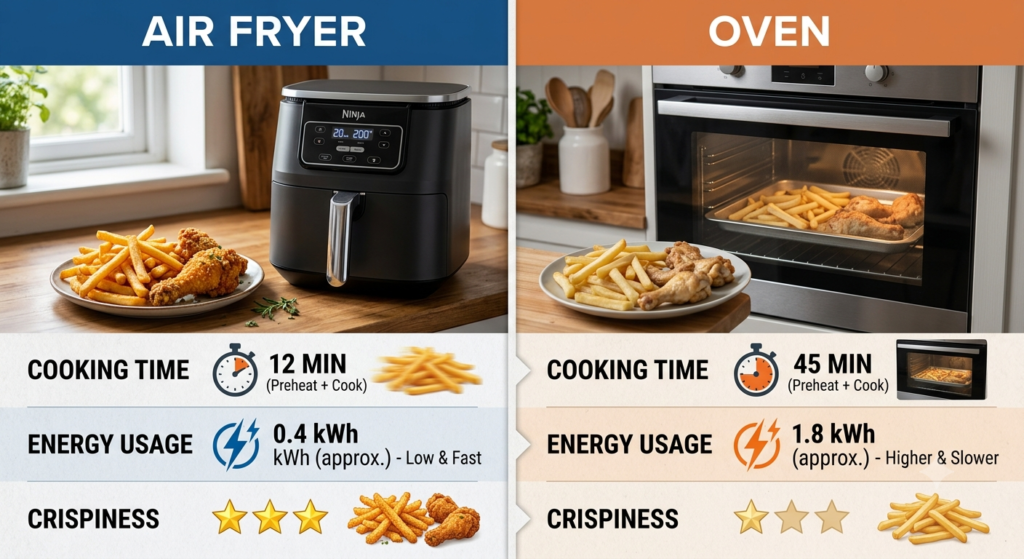
Many people ask, how does an air fryer work compared to an oven?
| Feature | Air Fryer | Conventional Oven |
|---|---|---|
| Cooking Speed | ⭐⭐⭐⭐⭐ | ⭐⭐⭐ |
| Energy Efficiency | ⭐⭐⭐⭐⭐ | ⭐⭐⭐ |
| Crispy Texture | Excellent | Good |
| Batch Size | Small–Medium | Large |
| Preheating Time | 2–5 minutes | 10–15 minutes |
| Best For | Everyday meals | Large family cooking |
Because the cooking chamber is smaller, hot air circulates more intensely. Therefore, air fryers often cook food faster and crispier than conventional ovens.
9. What Are the Different Types of Air Fryers?
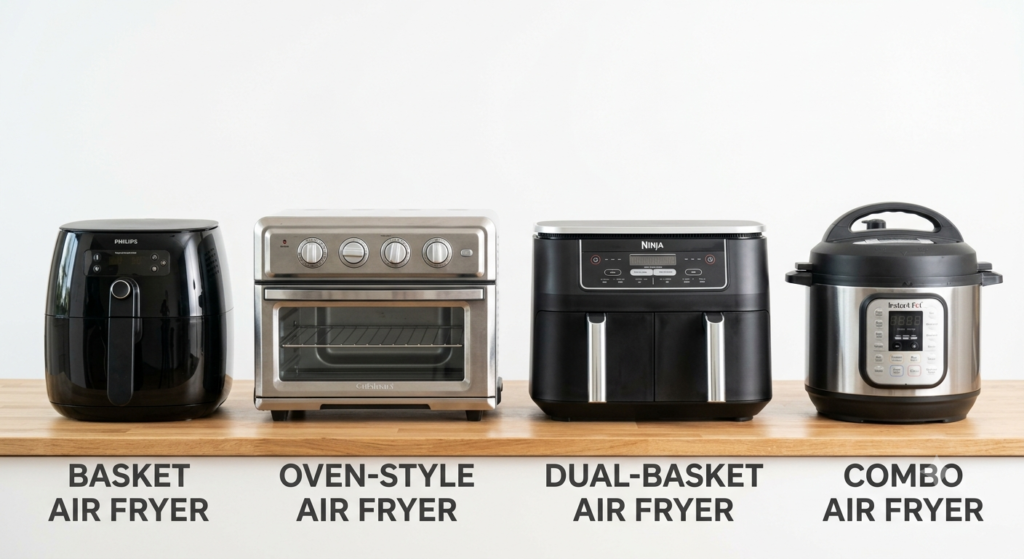
Several air fryer designs are available today.
Basket Air Fryers
Most common and beginner-friendly.
Dual Basket Air Fryers
Allow cooking two foods simultaneously.
Oven-Style Air Fryers
Offer larger cooking capacity.
Air Fryer Microwave Combos
Combine microwave and air frying functionality in one appliance.
Learn more about these multifunctional units here- Best Airfryer Microwave Combo in 2026
10. Is Air Fried Food Healthy?
Air-fried food can be healthy when prepared with nutritious ingredients.
For example:
- Air-fried vegetables retain flavor and texture.
- Lean proteins require minimal added fats.
- Homemade meals avoid excess preservatives.
Nevertheless, air frying does not automatically make unhealthy foods healthy. Portion size and ingredient quality still matter.
11. How Do Air Fryers Cook Faster?
The answer lies in airflow efficiency.
Reasons Air Fryers Cook Quickly
- Smaller cooking chamber
- Concentrated heat
- Powerful convection fan
- Faster heat transfer
As a result, cooking times are often reduced by 20–30% compared with conventional ovens.
📌 Did You Know? Most air fryers cook about 20–30% faster than conventional ovens because their smaller cooking chamber allows hot air to circulate more efficiently.
Does an Air Fryer Use Less Electricity?
Yes.
Because an air fryer has a much smaller cooking chamber than a conventional oven, it usually reaches cooking temperature more quickly and runs for a shorter period.
For everyday meals, this often results in lower electricity consumption than heating a full-size oven, although actual energy use depends on cooking time, wattage, and the appliance model.
12. Tips for Using Your Air Fryer
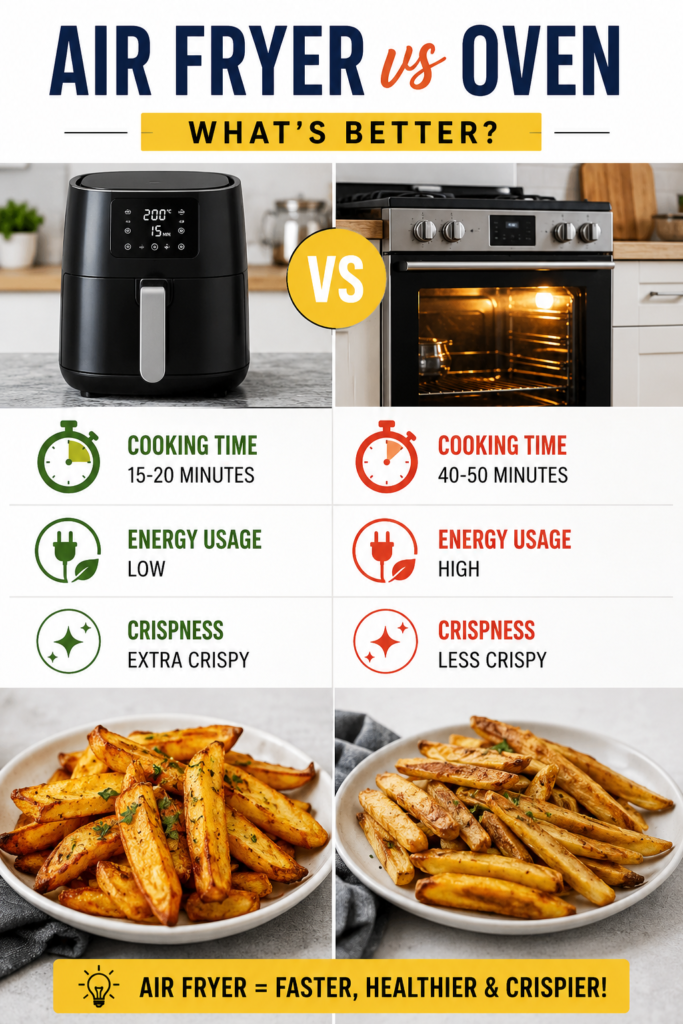
To get the best results, follow these practical tips:
- Avoid overcrowding the basket.
- Preheat when recommended.
- Shake food during cooking.
- Use a small amount of oil for extra crispiness.
- Clean the basket regularly.
- Check food a few minutes early.
If you’re shopping for a new model, you may also find these guides helpful:
Cleaning Tip: Wash the basket after every use. Grease buildup can restrict airflow over time, reducing crispiness and causing lingering cooking odors.
Air Fryer Pros and Cons
Pros
- Faster cooking
- Uses significantly less oil
- Crispy texture
- Easy cleanup
- Energy efficient
- Great for small kitchens
Cons
- Smaller cooking capacity
- Some foods require trial and error
- Can become noisy because of the fan
- Requires shaking for even cooking
- Not suitable for every recipe
Frequently Asked Questions
How does an air fryer work without oil?
Air fryers use rapidly circulating hot air to cook food. Therefore, they can create a crispy texture with little or no added oil.
Is an air fryer healthier than deep frying?
Yes. Air fryers generally use significantly less oil, resulting in fewer calories and less fat.
Does food taste the same as deep-fried food?
While not identical, many foods develop a similar crispy texture and satisfying flavor.
Which is better: an air fryer or a microwave?
They serve different purposes. Microwaves excel at reheating and defrosting, whereas air fryers are better for crisping and browning food.
Can an air fryer replace an oven?
For small households and everyday cooking, an air fryer can replace an oven for many recipes. However, large meals may still require a conventional oven.
Conclusion
An air fryer works by combining rapid hot air circulation, convection heating, and the Maillard reaction to cook food quickly while creating a crispy exterior with far less oil than traditional deep frying.
Although it doesn’t completely replace every cooking appliance, it’s one of the most practical tools for preparing everyday meals. From vegetables and lean proteins to frozen snacks and baked treats, an air fryer delivers fast, consistent results while using less energy than many conventional ovens.
If you’re choosing your first model, focus on the basket size, cooking capacity, cleaning convenience, and the features you’ll actually use rather than simply buying the largest appliance available.
With the right cooking techniques—and a little practice—you can enjoy healthier, crispier meals in less time.